
China Dehumidifier Manufacturer
Source industrial, commercial, and specialized equipment from trusted China dehumidifier manufacturer partners. Browse options and request a quote.
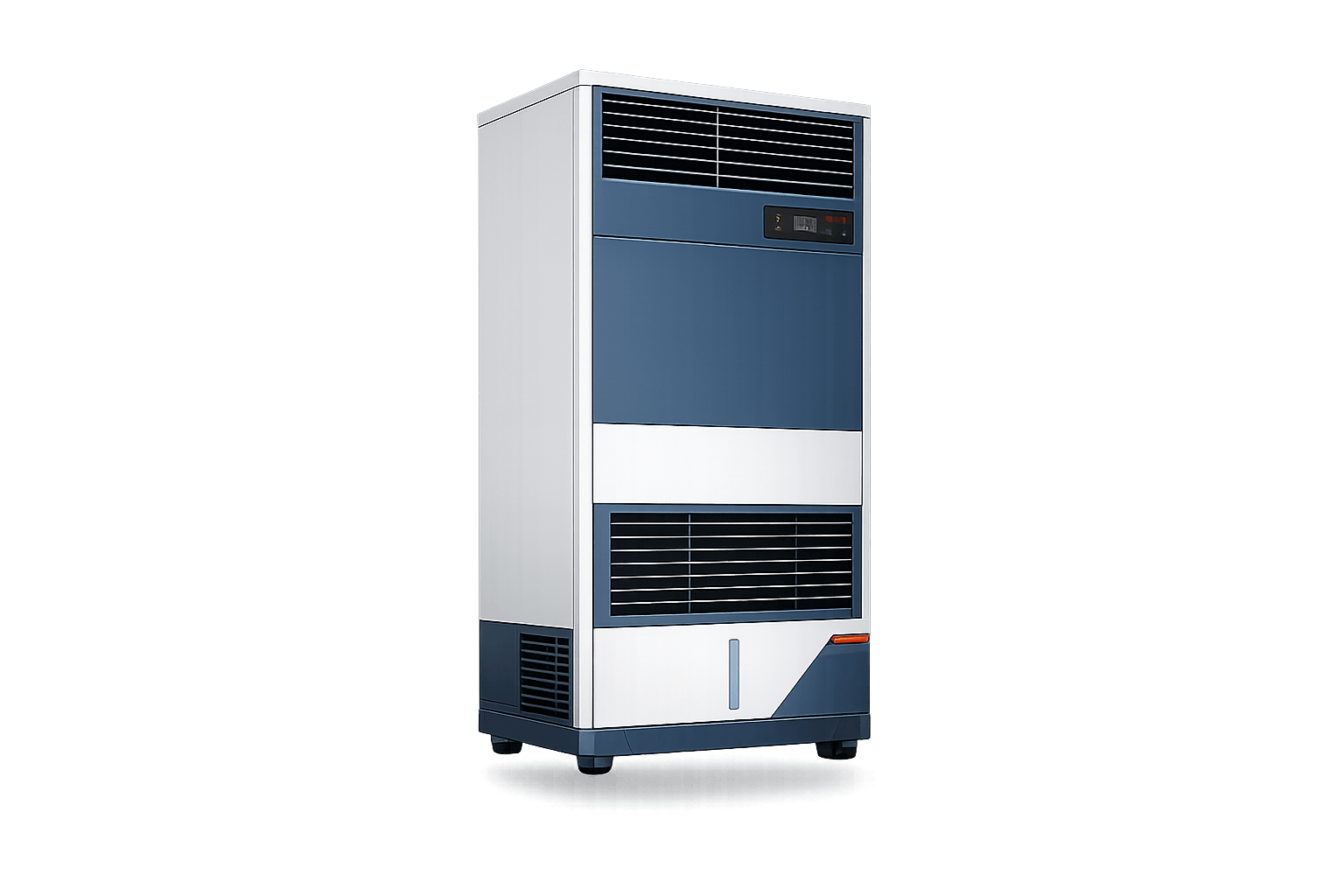
Types of Dehumidifiers Available
Browse eight popular dehumidifier types available through our China air dehumidifier manufacturer partners. Compare the options below, and request a quote.
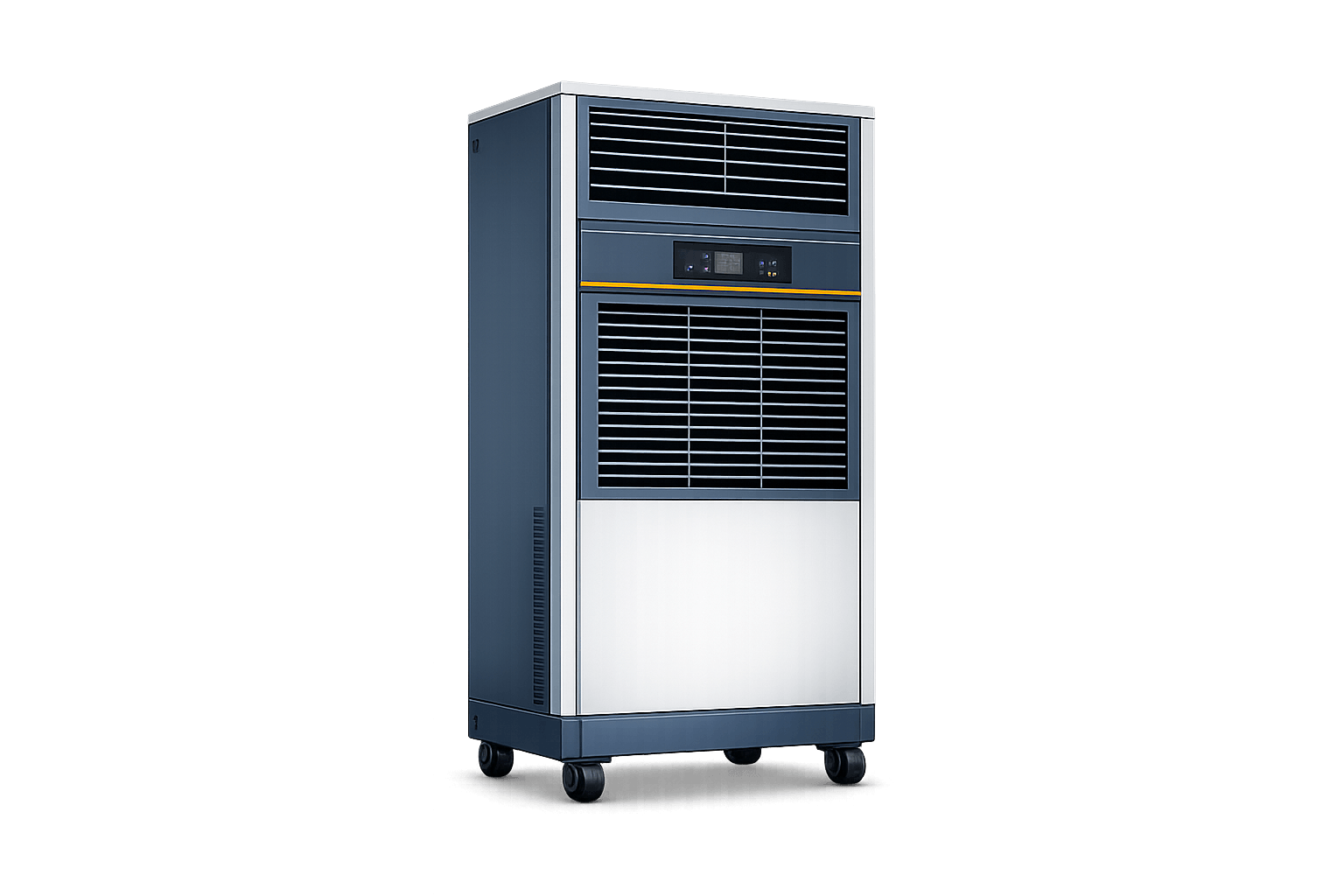
Industrial Dehumidifiers
Industrial units are made for business operations, production, storage, or other heavy-duty environments. Ideal for the food industry, greenhouses, warehouses and other heavy duty operations. These units can generally run long hours and handle bigger moisture loads.
Learn More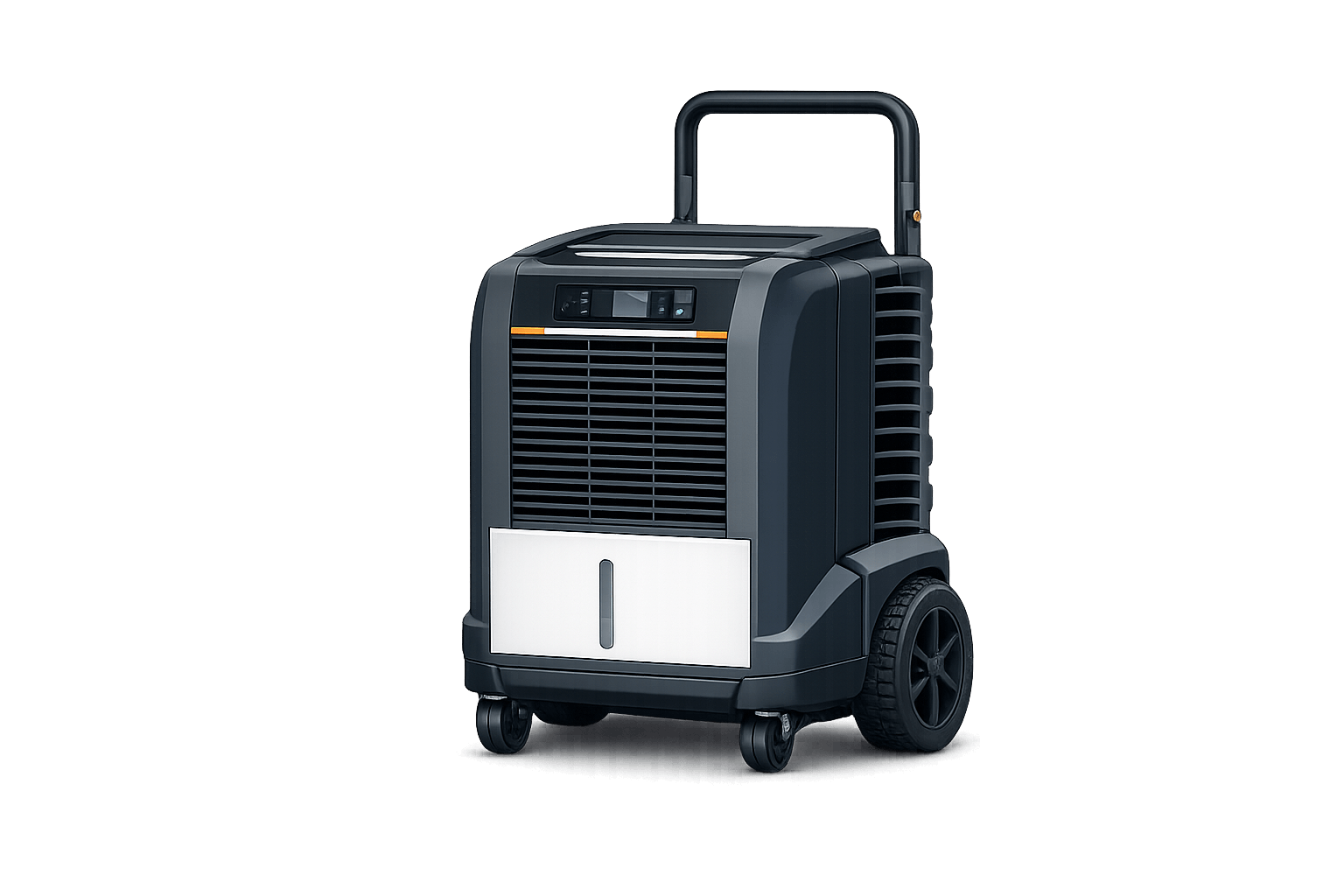
Commercial Dehumidifiers
Commercial units are built for business, public, or professional spaces with moderate level humidity-control needs. These can be portable, wheeled, fixed, and restoration-style units. Ideal for offices, hotels, shops, basements, and gyms.
Learn More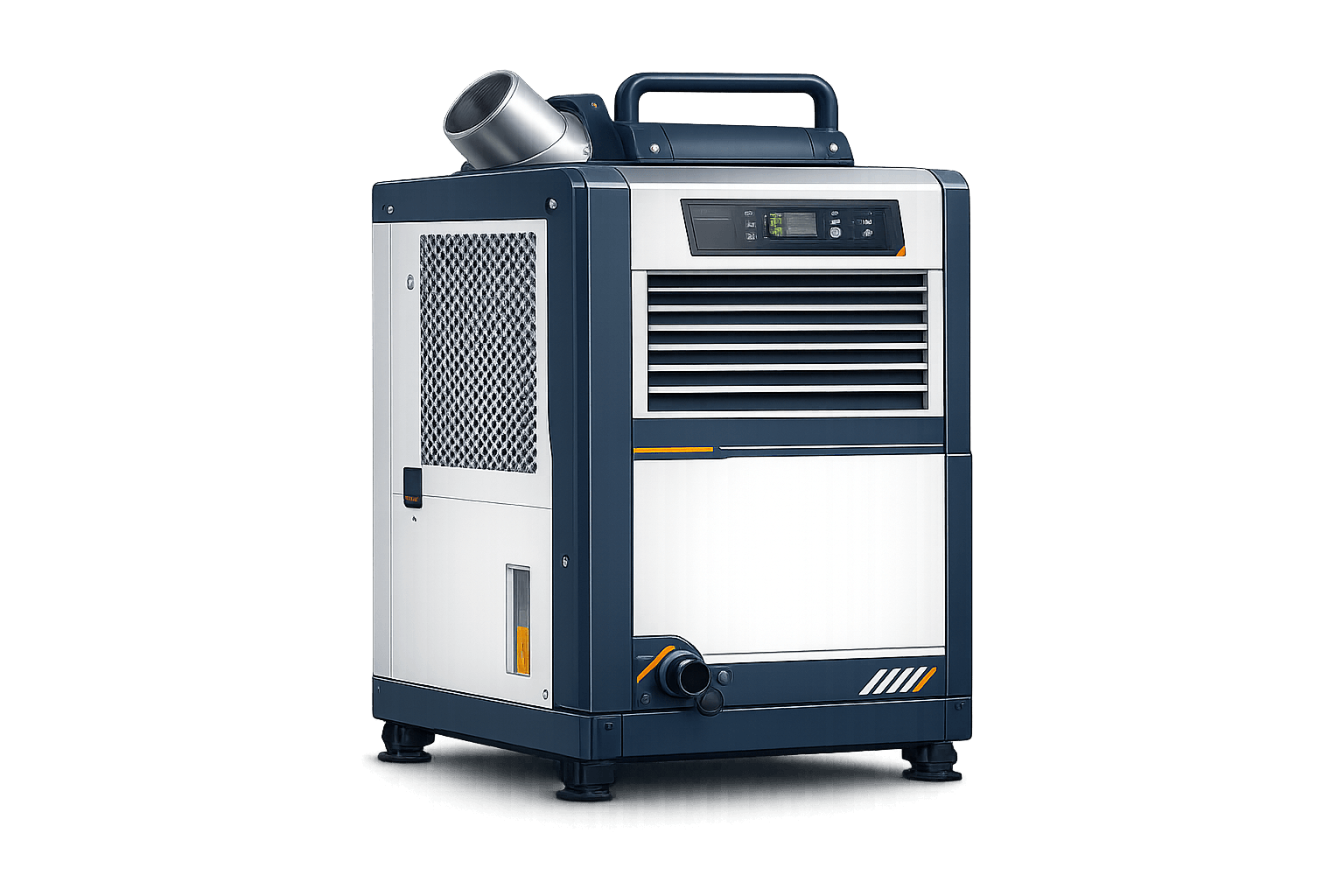
Desiccant Dehumidifiers
Desiccant dehumidifiers remove moisture without cooling the air. They use a moisture-attracting material to capture water vapor from the air. This style of dehumidifier can work well in cold or very dry spots. Good for cold storage, drying rooms, pharma plants, electronics work, and battery lines.
Learn More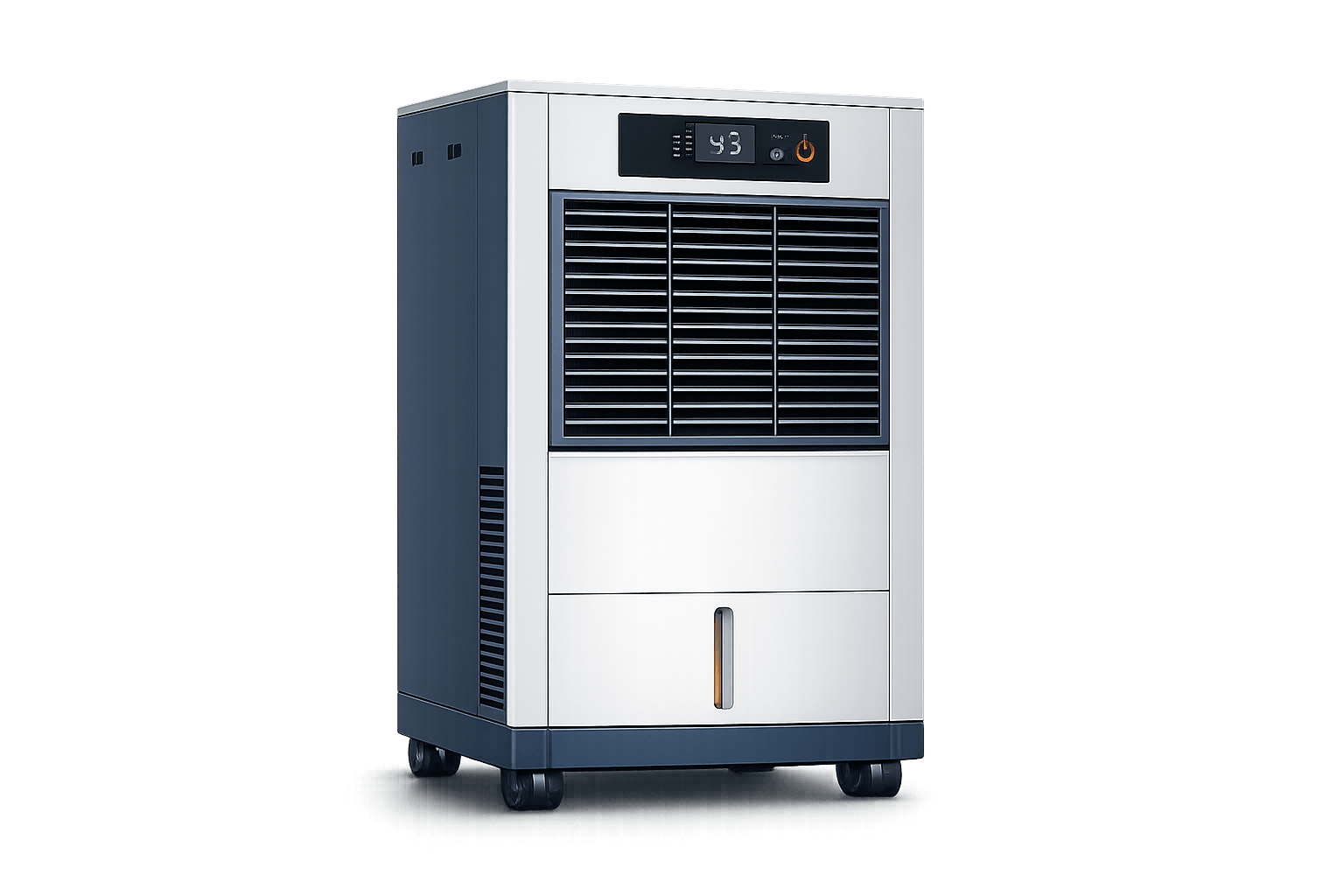
Refrigerative Dehumidifiers
Refrigerative dehumidifiers cool the incoming air so the moisture turns into water, then send the drier air back into the room. Good for comfort and mid-level industrial use.
Learn more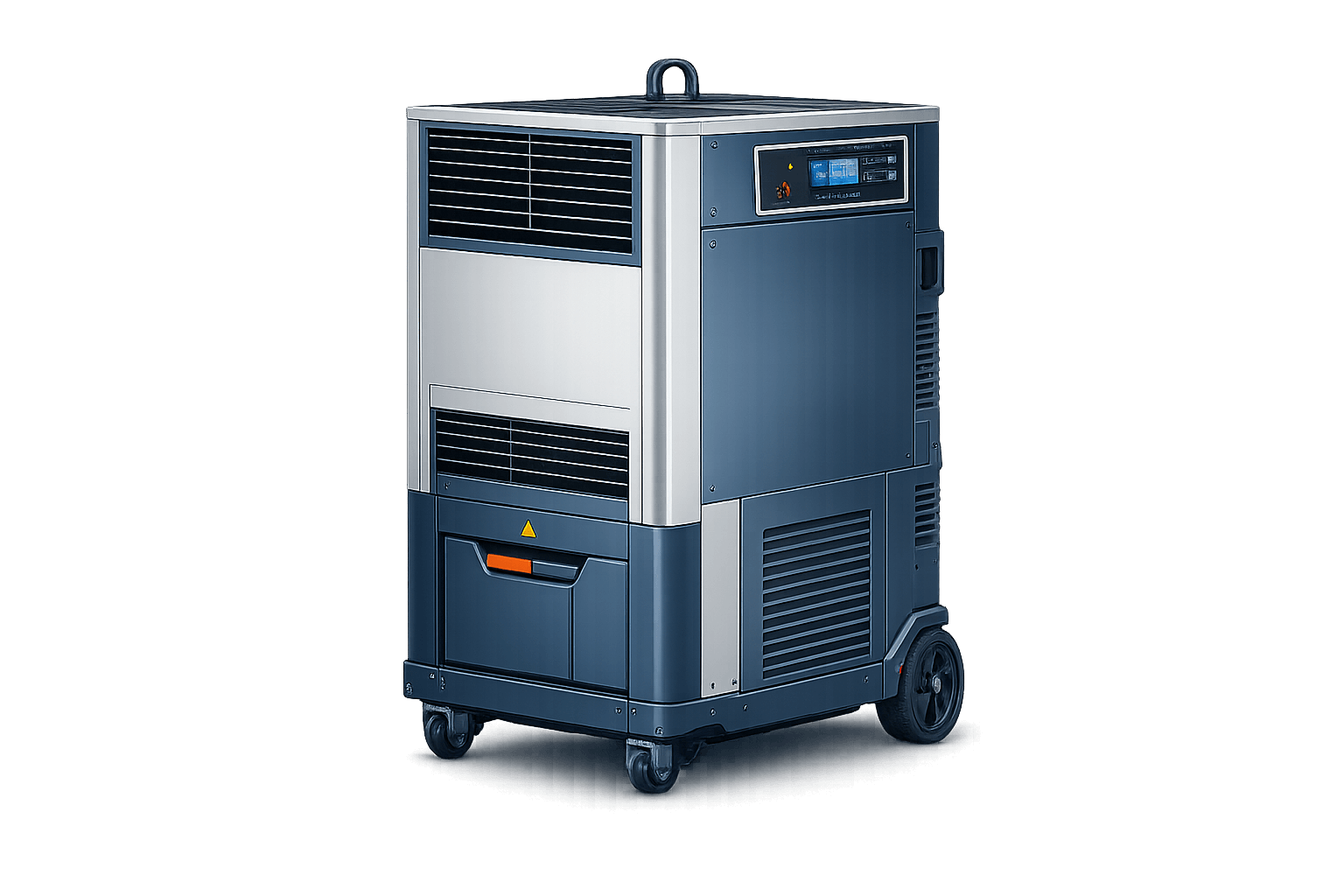
High Temperature Dehumidifiers
These units are built for hot locations. Each model has its own operating temperature limits based on its design and components. Good for drying rooms, food lines, wood drying jobs, heated workshops.
Learn More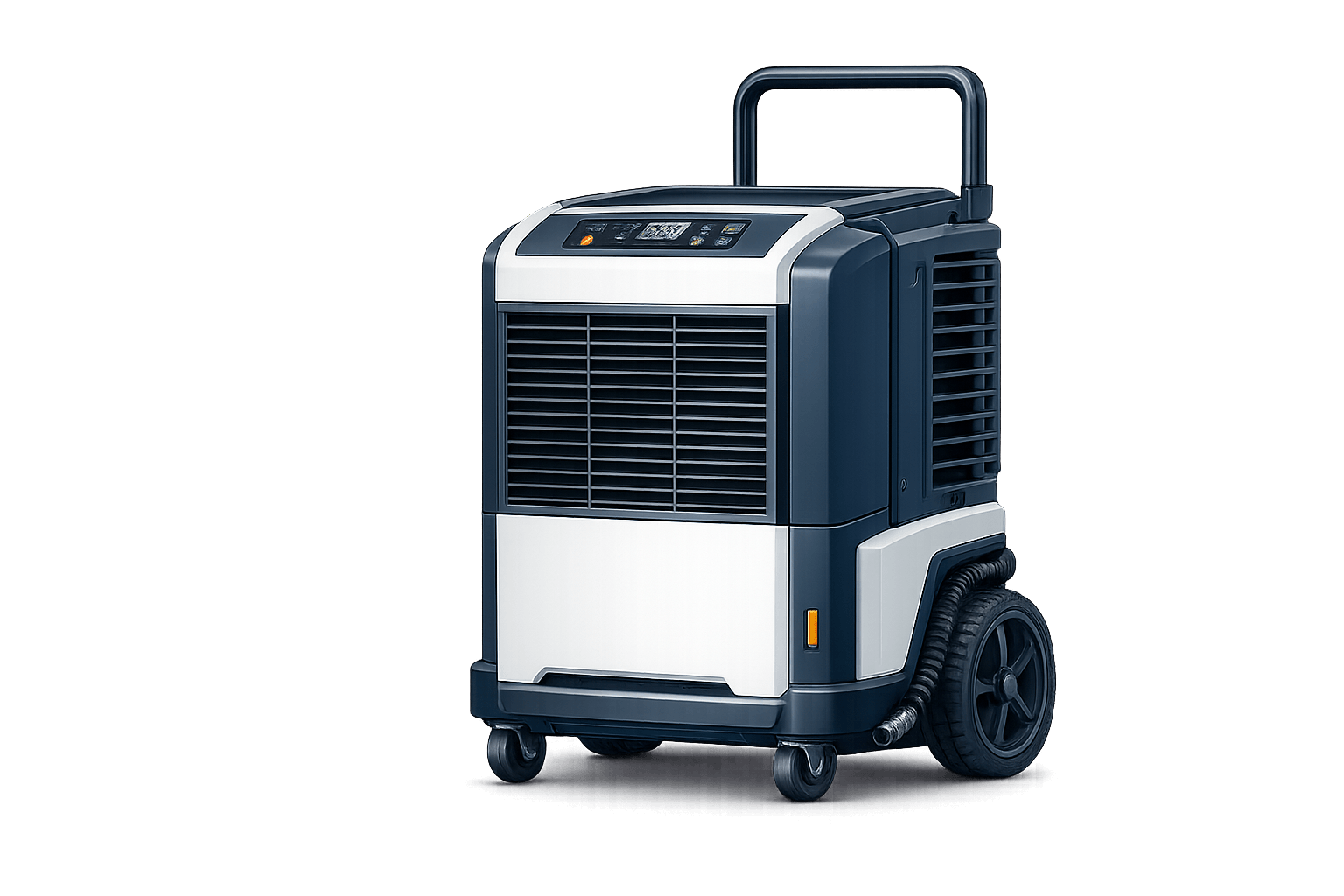
Low Temperature Dehumidifiers
Cold locations can require specific equipment. Some common features include defrost systems, specially tuned refrigerative units, and other gear built for cold rooms.
Learn More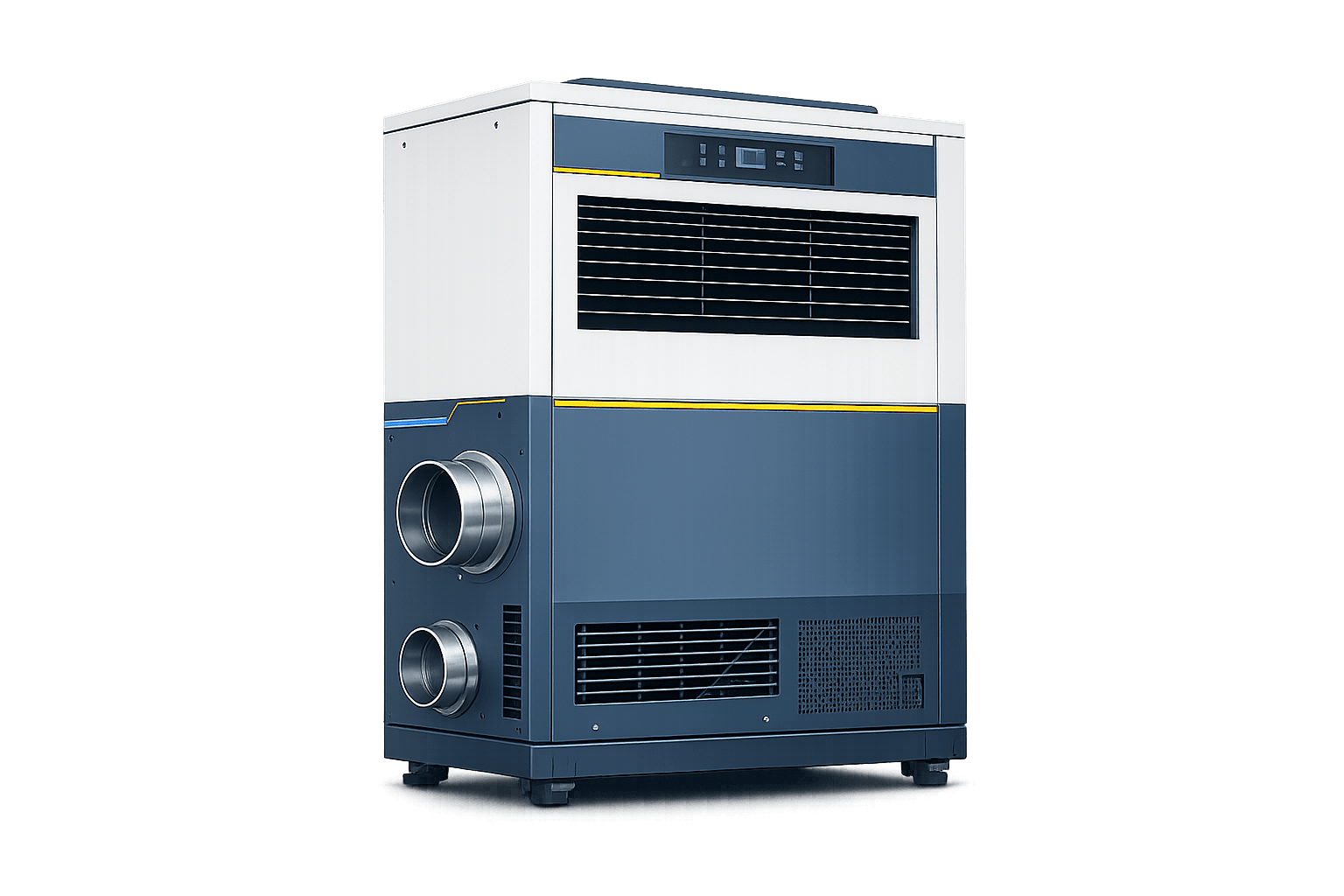
Dry Air Dehumidifiers
Dry-air systems are built for drying jobs and spots that need lower humidity than usual. These are good for drying rooms, plastics work, electronics lines, battery production, and pharma manufacturing.
Learn More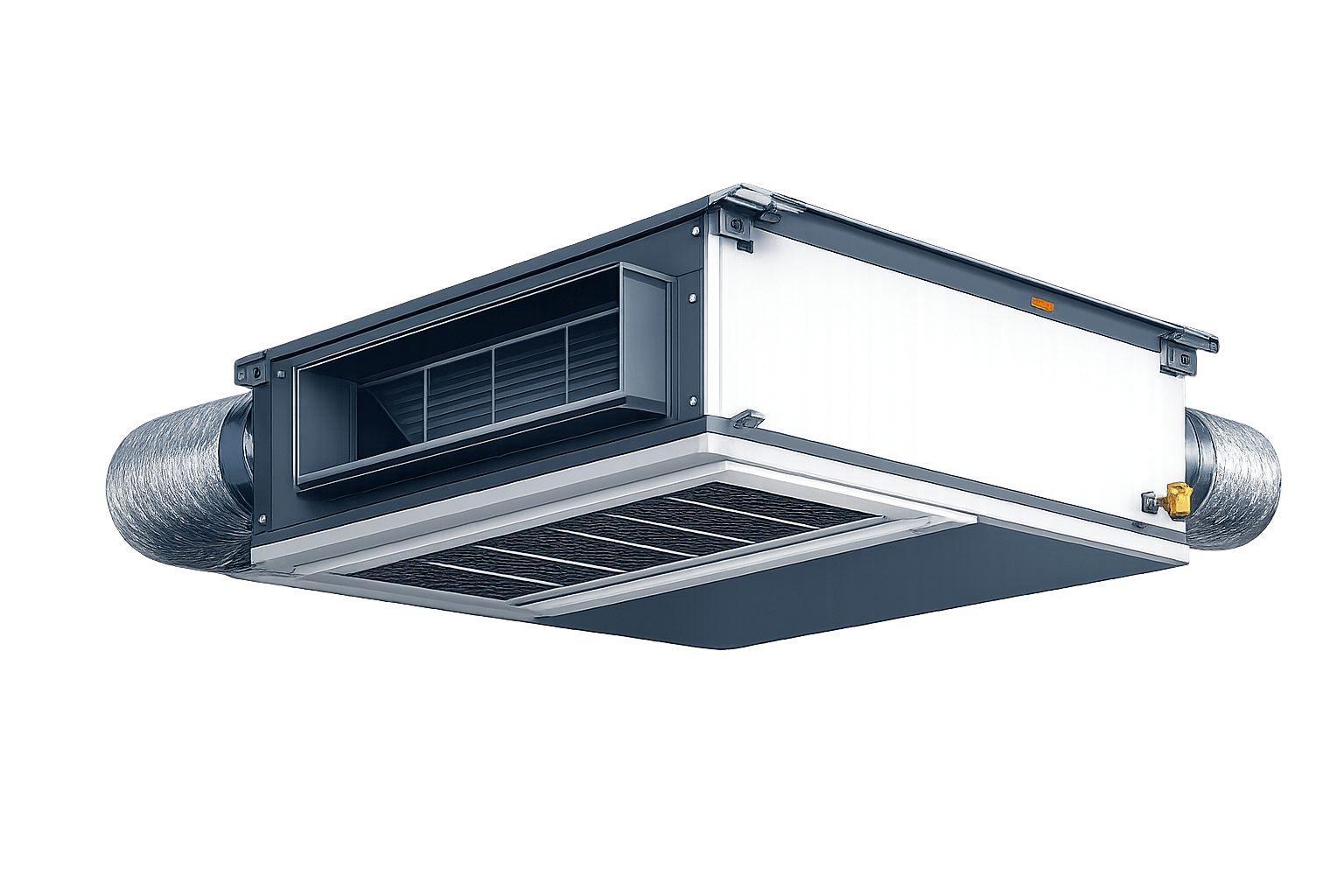
Ceiling Ducted Dehumidifiers
These are good for anywhere a floor unit would get in the way. Ceiling-mounted and ducted dehumidifiers are installed overhead. These are sometimes a good fit for indoor pools, commercial buildings, grow rooms, storage areas, and basements.
Learn MoreRequest a Quote
Looking for dehumidifiers from a Chinese manufacturer?
The steps are simple:
Tell us your needs
Review the Options
Receive Quote
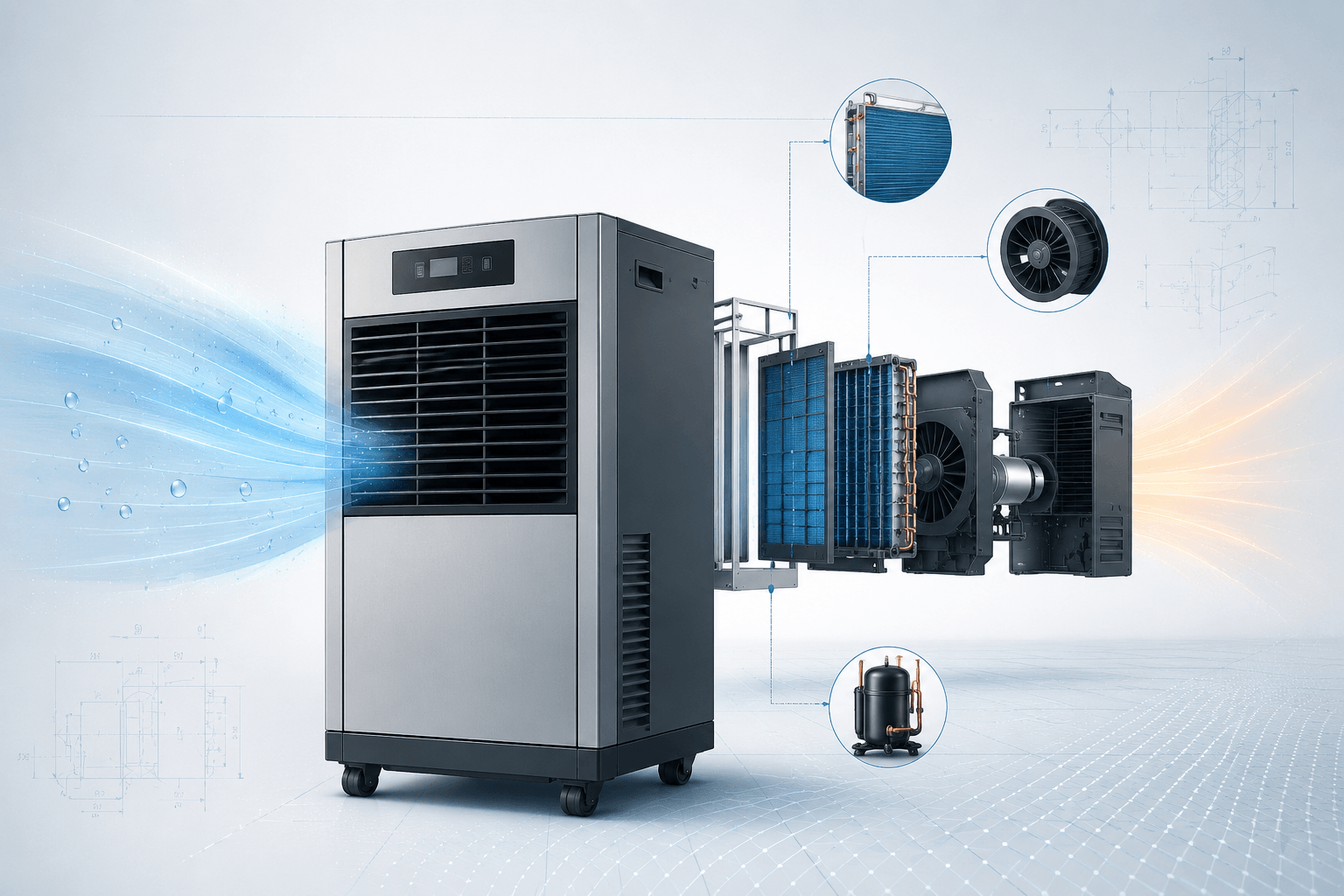
Get A Dehumidifier That Will Last
Experience the quality and expertise of Chinese engineering. Source quality dehumidifiers with efficient customization options.
Our partners support a wide range of dehumidifier designs and performance requirements.
China's dehumidifier manufacturing ecosystem features:
- Skilled workforce
- Specialized factories
- Established component suppliers
- Extensive production infrastructure
- Move from specification to production efficiently
- Wide performance range
- Flexible customization
- Competitive pricing
Configuration Options
Product Range and Customization
There is a wide range of options.
Note: What's on offer, and at what order size, depends on the specific maker's own review process.
Pricing, Minimum Orders and Export Support
Price is specific to each individual order. This will depend on your needed:
- Unit type
- Capacity
- Parts
- Custom work
- Certification scope
- Order size
- Packing
- Shipping terms
Minimum order size varies too, from single units on big industrial gear to higher counts for private-label products.
Export support will depend on your specific situation.
Common Dehumidifier Applications
Two important considerations when fitting gear to a space: the space itself, and why humidity needs control there. Examples of situations that may warrant different solutions include condensation, product care, steady process, drying, and desired comfort levels.
Note: Two buildings the same size can still need different gear. Determining factors: room volume, heat, air leaks, airflow, in-house moisture, and target humidity.
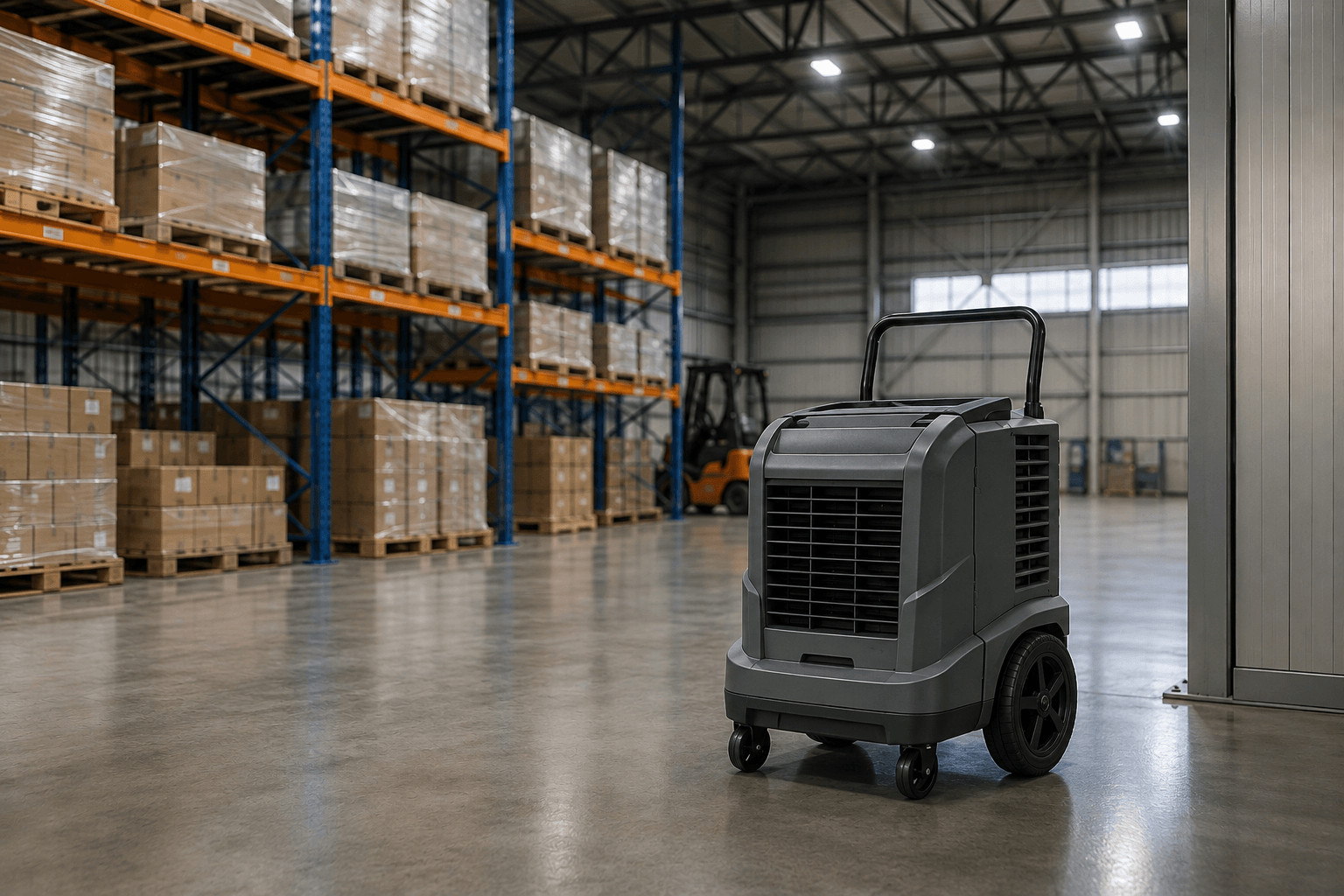
Warehouses, Factories and Workshops
Spaces where uncontrolled humidity can cause serious problems.
- Condensation
- Rust
- Ruined stock
- Failing packing
- Mold
- Slow output
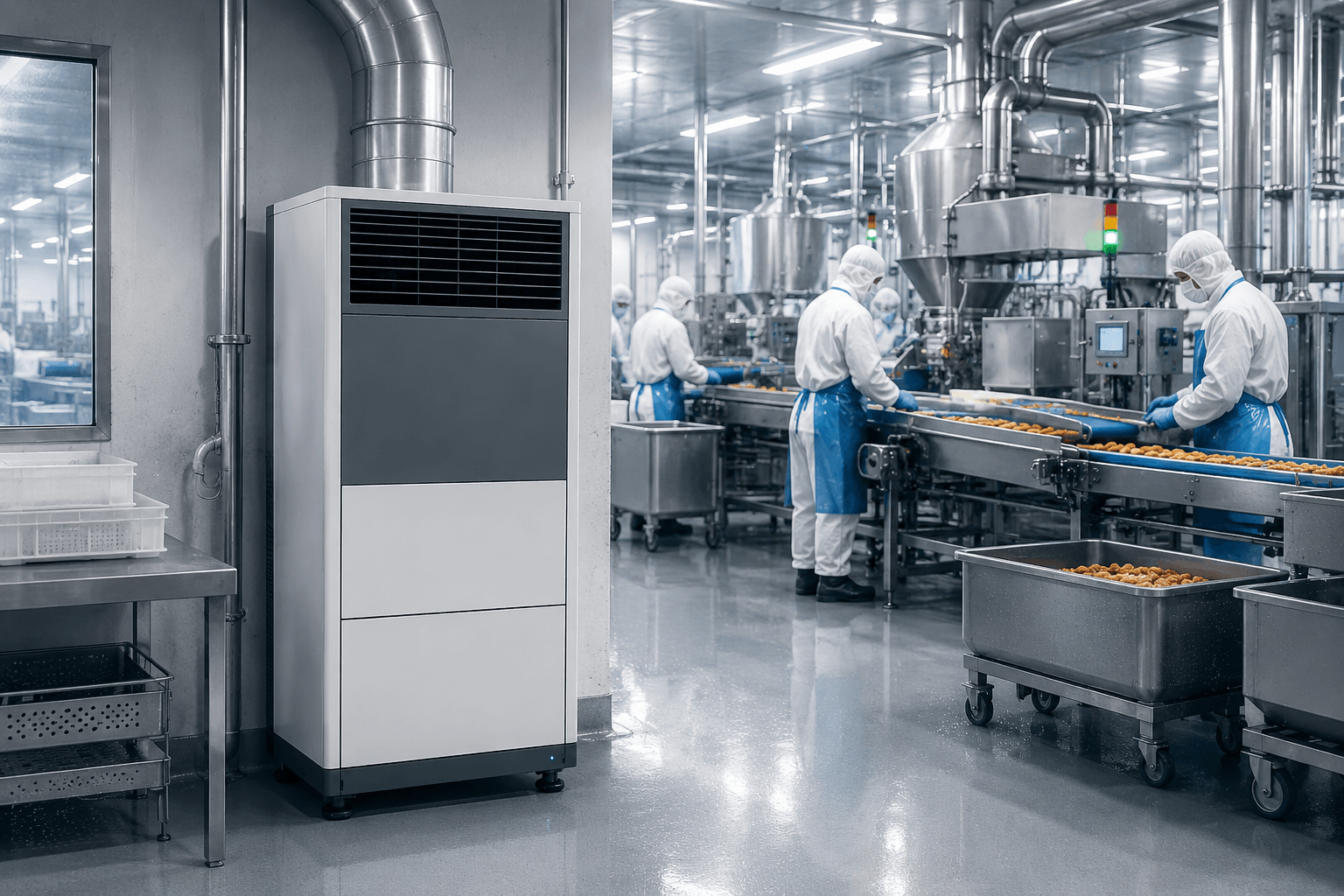
Food Processing, Pharmaceutical and Laboratory Facilities
Spaces where humidity control supports product longevity, packing, storage, and continuous output.

Greenhouses, Swimming Pools and Commercial Buildings
Control plant moisture, nighttime humidity swings, condensation, airflow, and heat more effectively.
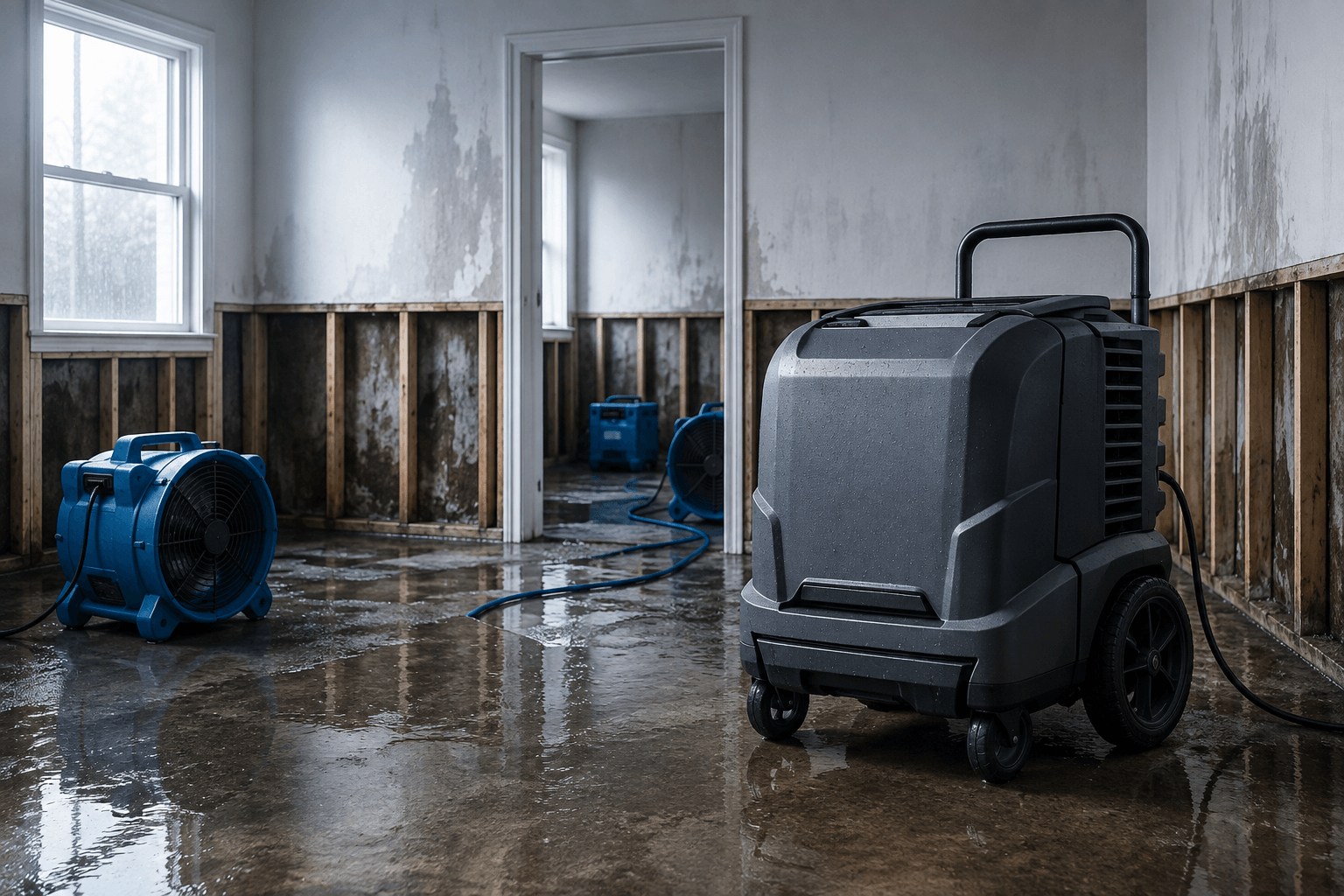
Basements, Garages and Water-Damage Restoration
Does your space need moisture control all year round? Does your space need cleanup after a flood?
How to Choose the Right Dehumidifier
Important to understand: A liters-per-day or pints-per-day rating is not that helpful without also knowing the heat and humidity it was tested at.
The same unit can produce very different capacity ratings depending on the temperature and humidity conditions used during testing.
Additional considerations: moisture load, running conditions, target humidity, mount type, controls, power, and continuous run needs. Depending on operating conditions, dehumidification systems may use refrigerative cooling, desiccant materials, or dedicated outdoor-air equipment.
Important: ASHRAE addresses cooling-coil, desiccant, and mechanical dehumidification equipment in separate handbook chapters. Dedicated outdoor-air systems may also incorporate dehumidification as part of a broader ventilation system.
Use the list below to gather what you'll need before you ask for a quote.
- Moisture load and source of the moisture (consider: production processes, occupancy, and ventilation)
- Minimum and maximum operating temperature
- Current and target relative humidity
- Room specs (make sure to include ceiling height and door openings)
- Desired installation type: portable, floor-standing, ceiling-mounted, or ducted
- Required controls, drainage method, and power supply
- Whether operation needs to be continuous or intermittent
- Note if it's a crawl space, an attic or another sensitive environment
Capacity, Airflow and Room Size
Sizing depends on:
- Room size
- Ceiling height
- Air changes per hour
- Door count
- Airflow
- Crowd size
- Wet stock
- Work steps
- Outside air leaks
Temperature and Target Relative Humidity
Refrigerative systems often perform best in warm, humid air. Cold locations, or situations that require very low humidity, often do better with desiccant systems.
| System Type | Performs Best When |
|---|---|
| Refrigerative | Air is warm and humid |
| Desiccant | Locations are cold, or very low humidity is required |
For general indoor moisture and mold control, the EPA recommends keeping relative humidity below 60%, ideally between 30% and 50% where possible. Industrial and process applications may require different targets. For process or storage work, share your low and high temps, current humidity, and target humidity, and note whether that target must hold non-stop or only at certain times.
Humidity itself isn't tracked just one way — NIST notes it can be shown through relative humidity, dew or frost point, water mole ratio, or water mass ratio. Knowing which one your process needs makes the rest of this easier.
Controls, Drainage and Installation Type
Control options can include built-in humidistats, outside sensors, timers, auto-restart, defrost cycles, alarms, remote checks, and RS485 links — though keep in mind that not every unit has all of these.
- Built-in humidistats
- Outside sensors
- Timers
- Auto-restart
- Defrost cycles
- Alarms
- Remote checks
- RS485 links
Drainage options include tanks, gravity drains, pumps, and fixed pipes. Installation can be portable, floor, ceiling, or fully ducted.
Energy Efficiency, Noise and Continuous Operation
Other factors are important aside from input power alone. We also recommend considering moisture-removal output, and only under matching conditions. Keep in mind that a unit that looks lean on paper might not be lean in your building.
Additional factors: sound level, fan speed, compressor cycling, filters, service access, and run hours.
Note: All claims of efficiency are dependent on model-specific test data.
Standard and Custom Manufacturing Options
You can choose between a stock unit or a custom build.
| What's Different | Stock Units | Custom Builds |
|---|---|---|
| Specifications | Established specifications | Design review to match your specification |
| Engineering & testing | Less engineering work | Samples, tooling, and test phases |
| Timeline & volume | Potentially shorter production times | Bigger order sizes typically supported |
Custom builds add collaborative phases based on your needs, moving through design review, samples, tooling, and tests before scaling to bigger order sizes.
OEM, ODM and Custom Equipment
Request a unit built to your specifications or branding requirements.
Voltage, Capacity and Airflow Configuration
If you know these items please share them, if you don't know, that's ok too! Please share:
- Voltage
- Phase
- Frequency (50 Hz or 60 Hz)
- Plug type
- Available electrical load
- Target airflow
- Needed moisture-removal output
Corrosion Resistance and Specialized Construction
If you plan to use a dehumidifier in a harsh environment then the following may be recommended:
- Coated coils
- Stainless-steel or coated cabinets
- Protected electrical components
- Washable filters
- Weather-resistant enclosures
- Application-appropriate materials
These are generally add-ons, not standard on every model.
Remote Monitoring and Temperature-Humidity Controls
Add-on features can include:
- Outside humidistats
- Heat sensors
- Set points
- Fault alarms
- Data logs
- Remote links
- Ties to a building control system
Information to Include in Your RFQ
Please submit a full request for a quote to save time. It helps size gear off your real conditions instead of a guess, and it gets you a solid quote faster.
Split what you truly need from what's just nice to have, so it's easier to flag which stock or custom picks actually fit. Here's what to include.
Note: If you aren't sure, that's totally ok too, just get in touch and you will receive assistance.
Application, Space Dimensions and Operating Conditions
Share the: use case, room length, width, height, layout, wall type, airflow, door count, crowd size, in-house moisture sources, and work schedule.
Note if the unit should be:
- Portable
- Floor-set
- Ceiling-set
- Ducted
- Indoors
- Outdoors
- Tied to existing HVAC gear
Current and Target Humidity
Please provide your low and high temps, current humidity, target humidity, an okay range, and how fast you need to hit that target.
Important: Specify whether the target humidity must be maintained continuously, seasonally, during production, or only after water exposure.
Required Capacity, Voltage and Quantity
Share a load number or a target output. No worries if not — that's fine too; capacity can also be calculated from the operating information you provide. Include:
- Voltage
- Phase
- Frequency (50 Hz or 60 Hz)
- Count
- Preferred controls
- Drain method
- Airflow needs
- Any setup limits
Destination, Certifications and Custom Requirements
We recommend telling us your target country and city, required certifications, label language, packing wishes, branding needs, paperwork required, ship terms, and target delivery date.
Other important notes tied to your project we recommend providing:
- Material
- Rust-resistance
- Remote-control
- Communication requirements
- Noise
- Refrigerant or hazardous-area requirements
- Safety
- Energy-efficiency or environmental requirements
Request a Dehumidifier Quote
Once you send your details, expect a follow-up before a solid pick or quote goes out.
Sharing full details is simply the fastest way to get a real quote.
Important: Please check your email spam folder.
Important: Please provide your WeChat ID when possible and check for new contact requests.